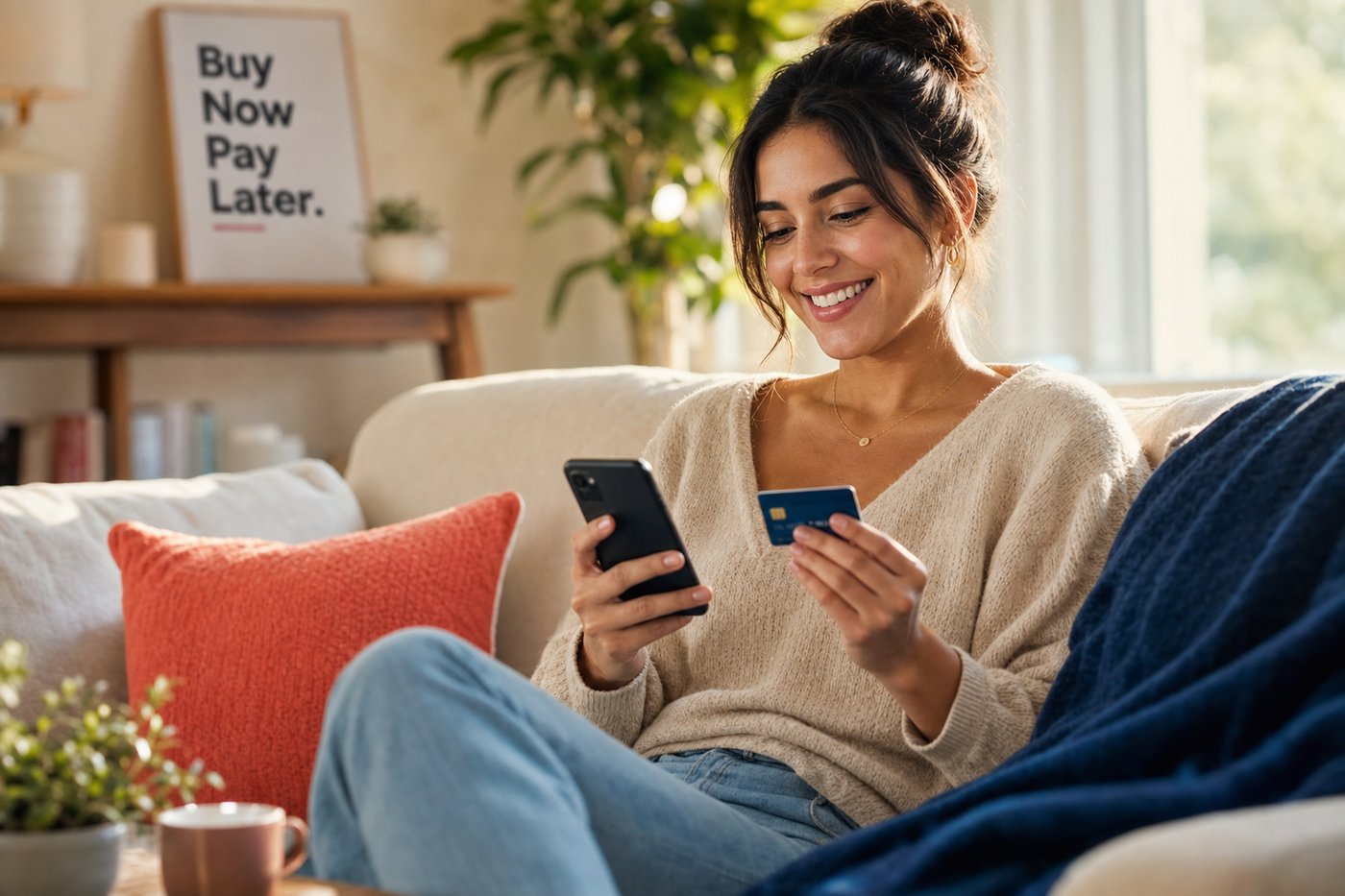
Before buy now, pay later became a mainstream phrase, Afterpay was already doing the thing. The Australian startup launched in 2014 with a single, simple offer: split any qualifying purchase into four equal payments, collected automatically every two weeks, with no interest charged if you pay on time. That clarity of proposition helped it grow to more than 24 million active customers across more than 348,000 merchants worldwide — and earned it a $29 billion acquisition by Block, Inc. in 2022. A decade on, the core product has held its shape while layers of app utility have been layered around it. The question for any new Afterpay user is whether that elegant simplicity still holds up in a category that has grown considerably more crowded.
What it is
Afterpay is a buy now, pay later service owned by Block, Inc. — the company formerly known as Square, which also operates Cash App and other financial products. Afterpay lets shoppers split purchases into four equal, interest-free installments collected over approximately six weeks: one payment at checkout and three more every two weeks after that. The service works online through integrated merchant checkouts, in store via the Afterpay Card (usable through Apple Pay, Google Pay, or Samsung Pay), and within Afterpay's own app, which functions as both a merchant discovery tool and an account management hub.
The product is deliberately uncomplicated. There are no subscription fees, no complex promotional tiers, and no long-term financing options with variable interest rates. The trade-off is that flexibility is limited compared to services like Affirm: if you need 12 or 24 months to pay for something, Afterpay is not the right fit. If you want to split a $200 jacket or a $350 piece of furniture across six interest-free weeks, it handles that scenario well and without friction.
Afterpay is available on iOS and Android and is accepted at a broad range of US fashion, beauty, home goods, and electronics retailers including Target, Macy's, Adidas, Urban Outfitters, and thousands of smaller online stores. Its Q3 2024 gross payment volume reached $8.24 billion, up 23% year over year, and gross profit was $242 million, up 29% — numbers that reflect a service still growing meaningfully in a maturing market.
How it works
Creating an Afterpay account takes a few minutes and requires a name, email address, mobile number, and a payment method — either a debit or credit card. Afterpay does not perform a hard credit inquiry during signup, which is a common entry point for people exploring BNPL for the first time or those who are managing credit inquiries carefully. There are no documents to upload, no income verification forms, and no waiting period before you can make a first purchase.
At checkout on a participating retailer's website, selecting Afterpay prompts you to log in or create an account and confirm the four-payment schedule. The first installment — exactly 25% of the purchase total — is collected at the moment of checkout. The remaining three payments are charged automatically to your linked card on the same weekday of each two-week cycle. The app sends push notification reminders before each payment date, which helps prevent inadvertent misses.
The Afterpay app provides a real-time view of upcoming payments, current account availability (described as "available to spend"), order history, and payment schedules for all active purchases. For in-store purchases, the app generates an Afterpay Card — a temporary Visa or Mastercard number loaded into Apple Pay or Google Pay — which you tap at any participating merchant's contactless terminal exactly as you would tap a regular card. The installment plan then appears in your app the same way an online purchase does.
Afterpay approves purchases individually rather than extending a general credit line. The amount you can spend at any given moment depends on your history with the service, your payment track record, and Afterpay's internal risk model. New users typically start with a lower limit that increases gradually with consistent on-time payments.
Key features
- Pay in 4: The signature product — four equal, interest-free payments over six weeks. The first is due at checkout; the remaining three fall on the same weekday in two-week intervals. Simple, predictable, and widely understood. No interest accrues and no fees apply as long as you pay on time.
- Afterpay Card: A virtual Visa or Mastercard number generated in-app for in-store use. Load it into Apple Pay or Google Pay and tap at any participating merchant's contactless terminal. This breaks the online-only limitation that characterized early BNPL products and makes Afterpay viable for physical store shopping.
- Available to spend display: The app shows a personalized spending estimate that updates in real time after each transaction and payment. It is not a hard credit limit but an indicative figure that gives users a sense of approximately what Afterpay will approve for a given purchase.
- Merchant directory: The app includes a browsable and searchable list of Afterpay-accepting retailers, organized by category — fashion, home, beauty, electronics, and others. Useful for discovering which brands support Pay in 4 before you visit a site or store, and for finding Afterpay-exclusive offers when merchants run them.
- Payment reminders: Push notifications and email alerts arrive before each scheduled payment, reducing the likelihood of a missed installment. The timing of reminders can be adjusted in app settings.
- Monthly statements: The app consolidates payment history into monthly summaries, making it easier to track BNPL spending alongside other financial records. This feature is more useful than it sounds for anyone who uses Afterpay regularly across multiple purchases at once.
- AutoPay from linked card: Payments collect automatically from your linked debit or credit card on scheduled dates, with no manual action required after the initial checkout approval. Users can update their linked card at any time in the app.
Who it's for
Afterpay works best for shoppers who want a dead-simple, no-interest payment split on discretionary purchases — clothing, shoes, beauty products, home décor, wellness items — where the total falls within a range that four biweekly payments can comfortably cover. The service is particularly well-used among younger adult shoppers in the 25–34 demographic who prefer to avoid revolving credit card debt but still want spending flexibility across pay cycles.
Shoppers at fashion and beauty-forward retailers will find Afterpay acceptance close to ubiquitous. The brand partnerships in these categories are deep — Afterpay has invested heavily in the fashion-adjacent retail sector — and for this audience, the product's simplicity is a feature rather than a limitation. There is nothing to configure, no interest math to perform, and no ongoing subscription to manage or cancel.
Afterpay is also useful for shoppers who want in-store BNPL without having to think about it in advance. Generating an Afterpay Card on your phone and tapping at a physical checkout is a low-friction process that does not require pre-planning, which makes it viable for the kind of spontaneous in-store purchase where BNPL financing would otherwise require prior arrangement.
Afterpay is less well-suited to shoppers who need longer financing terms for large-ticket items, want to earn rewards on their installment spending, or prefer a service that integrates broader financial tools like price tracking, cashback, or loyalty card management. For those use cases, a service like Klarna or a traditional rewards credit card is more appropriate.
Strengths
Simplicity is Afterpay's most defensible competitive advantage, and it is worth being specific about what that simplicity delivers. A new user can download the app, create an account, and make a first purchase in under five minutes. There are no choices to make about repayment terms, no APR ranges to evaluate, and no documentation to provide. The friction-to-first-purchase curve is as flat as anything in the BNPL category.
The network scale is real and matters for day-to-day usefulness. Block's reported figures of more than 348,000 global merchants and over one billion transactions processed globally mean that Afterpay appears as a checkout option at a genuinely broad range of retailers, not just a curated cluster. The Q3 2024 gross payment volume of $8.24 billion — up 23% year over year — confirms that the volume growth behind those merchant counts is active, not stale.
The in-store card feature meaningfully expands Afterpay's usefulness beyond the laptop browser. Being able to generate an Afterpay Card, load it into Apple Pay, and tap at a physical checkout transforms the service from an online-only convenience into an anywhere payment option. For shoppers who prefer browsing in physical stores but want the BNPL flexibility they have grown accustomed to online, this is a practically important upgrade.
The soft-check onboarding is appealing to a specific and important segment of users: those who are managing credit inquiries carefully, rebuilding credit, or simply uncomfortable with hard pulls. No hard credit inquiry means no credit score impact from signing up, and the ability to build a positive usage track record with Afterpay over time translates into higher available-to-spend figures for reliable users.
Things to watch
Afterpay charges late fees when a scheduled payment is missed. The fee structure varies by jurisdiction but in the US is typically capped at 25% of the original order value, with a minimum fee per missed installment. This represents a meaningful cost for a service marketed as "interest-free," and shoppers who habitually carry tight cash-flow margins should model what happens if a payment fails before relying on Afterpay for recurring purchases.
Spending limits can be more restrictive than expected, particularly for new users. Afterpay does not publish a fixed limit; instead, its internal model produces a variable available-to-spend figure that fluctuates based on payment history, number of active purchases, and other signals. Some users report their limit reduced after a single late payment, sometimes significantly enough to disrupt a planned purchase. Understanding that limits are dynamic — not fixed — is important context for anyone who plans to use Afterpay as a consistent payment method.
The structural absence of longer-term financing is a real limitation for larger purchases. A $1,500 appliance or a $2,000 piece of furniture is not well-served by four payments over six weeks if the cash-flow impact is too concentrated in a short period. For those situations, Affirm's longer monthly terms are more appropriate, even if they carry interest.
Customer service friction surfaces in user reviews with some regularity, with complaints about response times and dispute resolution speed that reflect challenges common to BNPL services broadly. Refunds depend on merchant processing timelines before they flow back through Afterpay's system, which can create a gap between returning an item and seeing relief on your payment schedule.
How it compares
In the US BNPL market, Afterpay sits alongside Klarna and Affirm as the three most widely recognized services. Of the three, Afterpay is the most structurally simple: it offers essentially one product (Pay in 4), charges late fees for missed payments, and does not extend into longer-term financing. Klarna, by contrast, adds a layer of shopping utility — price comparison, cashback offers, delivery tracking, loyalty card storage — that positions it more as a general shopping assistant than a pure payment tool. Affirm extends up to 60-month plans, has a physical card product with post-purchase plan selection, and charges no late fees on its pay-over-time products.
Our Affirm review covers the no-late-fee approach and the flexibility of longer-term financing in depth. For a direct three-way comparison, the Klarna vs Affirm vs Afterpay piece breaks down which service performs best in different purchase scenarios. The BNPL guide is a useful starting point if you are new to installment financing and want to understand credit reporting, spending limits, and what to watch for across services.
The Shop app is not a direct competitor — it is a universal order-tracking and checkout utility — but Shopify merchants often display both Shop Pay and Afterpay as checkout options, so the two frequently appear side by side at the same retailers. The shopping app privacy guide has relevant context on data practices for BNPL services worth knowing about.
Bottom line
Afterpay earned its position by doing one thing clearly and consistently for a decade. Pay in 4, zero interest, automatic payments, broad merchant acceptance — the formula is not complicated, and for a specific use case (splitting a mid-size discretionary purchase over six weeks), it works reliably. The late fee policy and variable spending limits are real limitations that deserve honest evaluation before you rely on the service for regular use. But if you shop frequently at fashion, beauty, or home goods retailers and want a frictionless way to smooth out cash flow without touching a revolving credit card, Afterpay remains one of the more credible and widely accepted options in the field. Browse our best BNPL apps ranking to see where it places against the full competitive set.